In search of happiness
With help from Rotarians around the globe, our inquisitive Everyman aims to discover how to find bliss
by Jeff Ruby
1 Dec 2025The summer before my senior year of college, I went on a weeklong baseball tour with my brother. At the time, my shoulders were solid, my hair full, my confidence overflowing. For nine days, we traveled from ballpark to ballpark with 24 other ecstatic fans on a cushy air-conditioned bus, cheering, laughing, meeting people. We oohed at fireworks from the bleachers in Camden Yards and paid our respects at the Lou Gehrig memorial at Yankee Stadium. In Detroit, I saw Cecil Fielder crush a home run so majestic and violent, it may well have put a crater in the moon.
Every night, we pulled into a Red Roof Inn, where Kenn and I unloaded all the luggage from the bus, a task that earned us a free 12-pack of Bud Light courtesy of the tour guide. Despite our best efforts, the unopened beer began to stack up until we were forced to fill a hotel bathtub with ice in Cleveland and throw a party. After everyone left, Kenn and I watched movies until I nodded off, falling into the kind of untroubled slumber that comes only with sun-logged exhaustion. I wasn’t simply seeing America. I was experiencing it.

Jeff Ruby spoke with Rotary members around the world to learn what happiness looked like for them.
When the trip ended, life returned with a thud and memories of the baseball trip were washed away in a tsunami of questions about my future. I felt unsettled and aimless, enduring a rocky senior year that involved a broken collarbone and endless worries about graduation. All I wanted was to be back in Detroit, drinking cheap beer with my brother and watching Fielder’s moon shot.
Fast forward 25 years: I was serving as the dining critic for Chicago magazine, a coveted position that came with prestige, power, and a mighty expense account. For entire months, I got paid to eat nothing but dry-aged rib eyes rubbed with Himalayan sea salt and sizzling with thick knobs of garlic truffle butter. If any job ought to have sparked happiness, this was the one.
Instead, it made me anxious. When I wasn’t fretting over the writing, I was certain that I would be called out in public by an angry chef or get exposed as a fraud with no food background. I engaged in senseless Twitter wars with strangers and struggled to find pleasure amidst my skyrocketing cholesterol and expanding waistline. In the back of my mind lurked a queasy feeling that I had landed in the wrong job, the wrong life, and as the everlasting bacchanal slowly curdled into something oppressive and ugly, all I could think about was getting out. In other words: What the hell was wrong with me?
Ask 10 people what they want out of life and common themes quickly emerge. Many will speak of love or peace or good health. Others focus on God or spiritual pursuits, seeking deeper truths through personal growth or making a positive impact on the world. Most often, though, people seek some form of happiness.
But what exactly is happiness? A feeling? A physical sensation? Something more mystical and universal? Your interpretation, which may change from day to day, depends on any number of factors: your upbringing, your experiences, your brain chemistry. The irony, that most of us have no clue how to define a concept as subjective as happiness — let alone achieve it — doesn’t stop us from trying. A maxim attributed to Plato defines a human as “a being in search of meaning,” and 2,400 years and millions of self-help books later, no one’s come up with anything better.
Every year, the World Happiness Report surveys more than 100,000 people around the world and crunches data to create a global happiness ranking of countries. I always found the list a bit silly: Why was Finland always at the top? In what topsy-turvy world were Salvadorans, Saudi Arabians, or, for that matter, Brits happier than Italians who live la dolce vita? What was the deal with Egypt? The very idea of trying to define and categorize happiness on an international scale struck me as a pointless exercise.
Dig a little deeper, though, and you find that the index’s numbers are not based on people’s fickle emotions or the fleeting moments of pleasure I had learned to seek out. Rather, they are founded on “life evaluations” that reflect the larger circumstances of a person’s existence. This may include freedom to make life choices, having someone to count on, and generosity.
Temporary emotional states such as smiling and laughing (“I feel happy today”) are disregarded in favor of big-picture judgments (“I’m happy with my life overall”). The latter is related to a concept that Plato and Aristotle called eudaemonia, which translates today as “happiness” or “well-being” — though from a strictly Aristotelian perspective, the word represents a lasting peace achieved through living a meaningful life in accordance with one’s values.
This distinction underscores where so many of us go wrong. Though I had worked hard to get to my position at Chicago magazine, there was little about being a dining critic that aligned with my overall values. One day, my acid-tongued teenage daughter declared my days were spent “telling rich people where to eat,” and everything crumbled after that. A year later, I quit my job and went back to school to get a degree in social work.
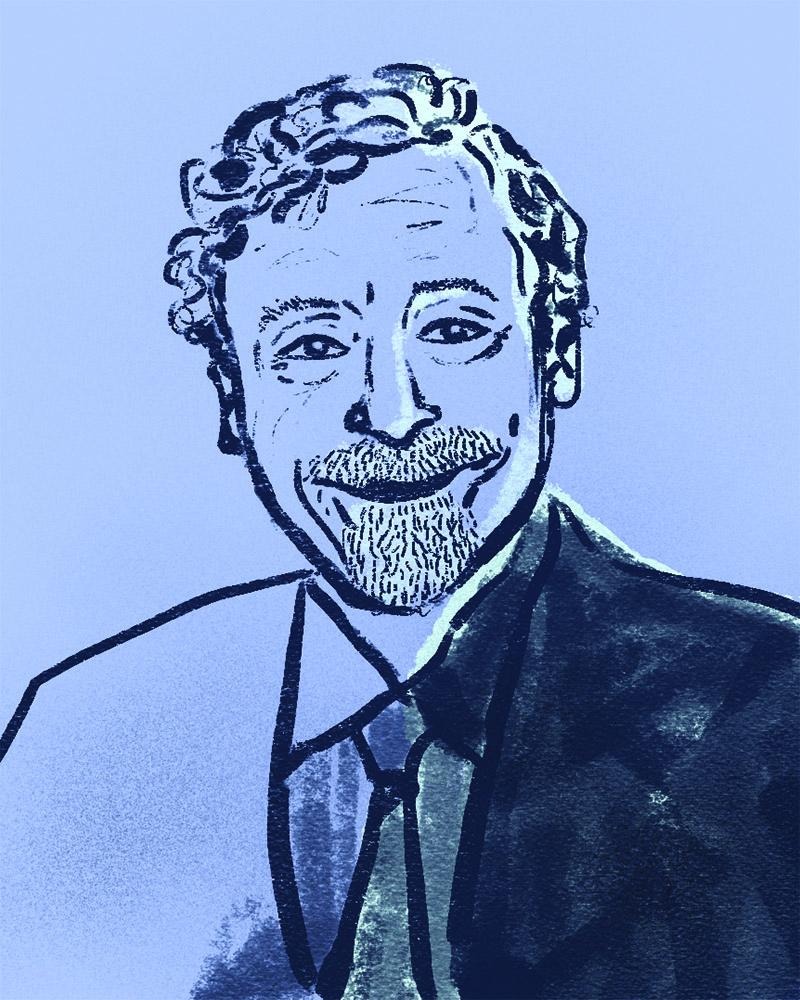
Michel Jazzar, Rotary Club of Kesrouan, Lebanon
What if a happy life isn’t so elusive after all? Maybe the answers are in plain view, sitting there in the World Happiness Report just waiting to be plucked. Hoping that was true, I reached out to Rotary members from five different countries around the world — and across the spectrum of national rankings — and asked each one how they define happiness in their lives. The goal was to collect not just big-picture philosophies, but also smaller, more concrete advice I could apply to my own life.
I started near the bottom. Likely affected by political instability and an ongoing economic crisis that has led to shortages of goods and services, Lebanon’s happiness rating ranks 145th among the 147 countries included on the happiness report. “To find someone happy rather than resilient in Lebanon is very difficult,” says Michel Jazzar, a 74-year-old dentist and past governor of District 2452 who lives in Jounieh, roughly 10 miles northeast of Beirut. “Lebanese are the happiest depressed people in the world.”
A sincere grandfatherly type, Jazzar thinks in Arabic, mentally translates those thoughts into French, and speaks them in English. He possesses a sincere positivity that cannot be faked; in his mouth, potential platitudes such as “We have to be citizens of the world” become profound calls to action. He offered me plenty of familiar advice — live in service to others; surround yourself with people you love; don’t let your ego run wild — but one phrase stuck out: He spoke of having a “giddy sense of humanity.” When I asked what that meant, he said that hope can lead to happiness, but one can practice being happy in a much more tangible way: through laughter. “I go on Facebook and listen to jokes,” he says. “I like to watch Steve Harvey to find out how Americans laugh.”
Steve Harvey? The key to happiness is Steve Harvey?
I dug up an old YouTube clip of Harvey onstage in his most ridiculous maroon suit riffing on the joys of driving a “raggedy-ass car.” It wasn’t really my thing, but there was something about the eager enthusiasm of stand-up comedy that felt comforting. Every morning, during the 20 minutes I used to meditate, I decided to watch a comedy set instead. Each time, it established a clear mood for my day. With John Mulaney and Sarah Silverman, I began to appreciate the humor in the most trivial situations of my life; watching Dave Chappelle helped me cut through the autopilot formality in my interactions with people — and I began to approach people with an openness that surprised even me.
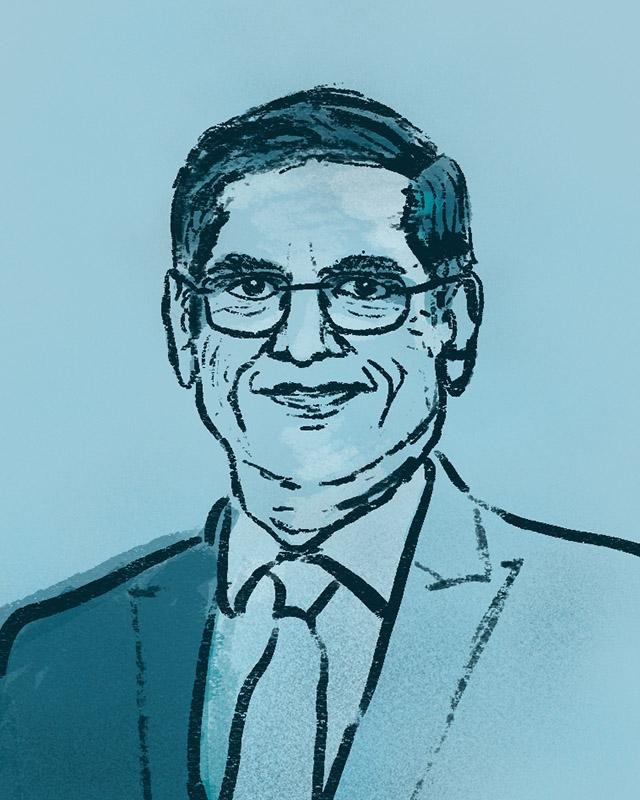
Ambalavanan Muruganathan, Rotary Club of Madras Mid-Town, India
Next, I connected with Ambalavanan Muruganathan, the CEO of a manufacturing company in Chennai, India, and a member of the Rotary Club of Madras Mid-Town. Judging the overall happiness of a country with a population of 1.45 billion seems particularly difficult, but India raised eyebrows by landing at 118. This was nine spots below its neighbor and political sparring partner, Pakistan, prompting an outraged Times of India to sourly complain, “India just sent a spacecraft to the Moon.” As if that mattered. Muruganathan didn’t wade into his country’s low ranking other than to say, “We’ve got a long way to go in stillness of mind.”
A yogi and fitness nut, Muruganathan, 58, repeatedly stressed the importance of working out and mindfulness, having “360 vision” and being fully aware of your surroundings. You can reach this state, he claims, not from seeking happiness but rather stability. And the best way to cultivate stability is through self-confidence, which must be instilled in children at a young age. “Schools need to identify the specialty in each child and help them achieve it,” he says. “Children have not been allowed to understand their greatness.” Only when people learn to understand themselves, Muruganathan says, will they embrace humanity — and their own potential.
I wasn’t able to fix the flaws in America’s educational system before this story was due, so I asked Avi, my self-assured 13-year-old, if Muruganathan’s statement rang true. “It’s not other people’s job to make me feel good,” she replied. “I have to do it myself.”
Avi explained that her confidence didn’t originate in school, but rather from horseback riding. I had been to a few of the kid’s lessons over the years and found them difficult to watch. Her tough instructor always seemed to be barking at her to keep her shoulders back. At 13, I would have fallen apart under the constant criticism; Avi sees it as the quickest way to improve at something that matters deeply to her. During the past school year, when a gym teacher chastised her for her gymnastic ineptitude, Avi simply shrugged. “I can control a 1,000-pound horse,” she said later. “Who cares if I know how to jump rope?”

Sapna Jaggeshar Mudhoo, Rotary Club of Helvetia Happiness, Mauritius
“We tend to wait for happiness to show up,” says Sapna Jaggeshar Mudhoo. “It is there already if you learn to know what signals your body and brain are giving you.”
A psychologist and, fittingly, a charter member of the Rotary Club of Helvetia Happiness, her sunny disposition mirrors her surroundings in Mauritius (ranked 78th), a tropical African island nation in the Indian Ocean known for stunning beaches, coral reefs, and, somehow, an underwater waterfall. But climate change and the economic impacts of the pandemic hit the island hard, and Jaggeshar Mudhoo says that Mauritians are busy “working for peace around us, and not within us.” In her practice, by teaching their brains to expect joy again — even in small moments — Jaggeshar Mudhoo instills in patients a feeling that their lives matter.
This I knew something about. As a therapist in private practice, I spend my days working with clients dealing with drugs, sexual abuse, health issues, and complex trauma. My preferred approach of psychotherapy, acceptance and commitment therapy, is built on the idea that our general notions of happiness are flawed. We’ve been conditioned to believe that happiness is our natural state, and if we’re not happy, something is wrong with us. What’s actually normal is an ever-changing flow of emotions, pleasant, painful, and boring. If we can learn to acknowledge our own thoughts — even uncomfortable ones — without judgment, then we can open ourselves up to a life with a broader range of emotions: peace, conflict, contentment, sadness. Think of it like painting with every color in the palette after trying the same shade of yellow over and over.
Per Jaggeshar Mudhoo’s advice, I spent a week keeping a “happiness journal,” noting moments of emotion in my life and their corresponding sensations. One came while my wife and I watched Avi compete in a horseback riding competition on a farm on a punishingly hot day. The mosquitos had a surprising bloodlust, and I had chosen the wrong shirt for the occasion. As the afternoon progressed, I could feel an itchy rash spreading across my back.
Our child got last place. But as I chatted with my wife and listened to the cicadas humming the end of summer, I felt a light feeling in my stomach and a gentle tingling in my neck. And when those sensations faded, I was left with a startling clarity that my brain, my body, and my surroundings had locked into place, like some kind of cosmic Tetris. I didn’t need air conditioning or a cold drink when I had a warm reassurance in my gut that the moment made sense, and I would remember it. That’s when I suspected Jaggeshar Mudhoo was onto something.
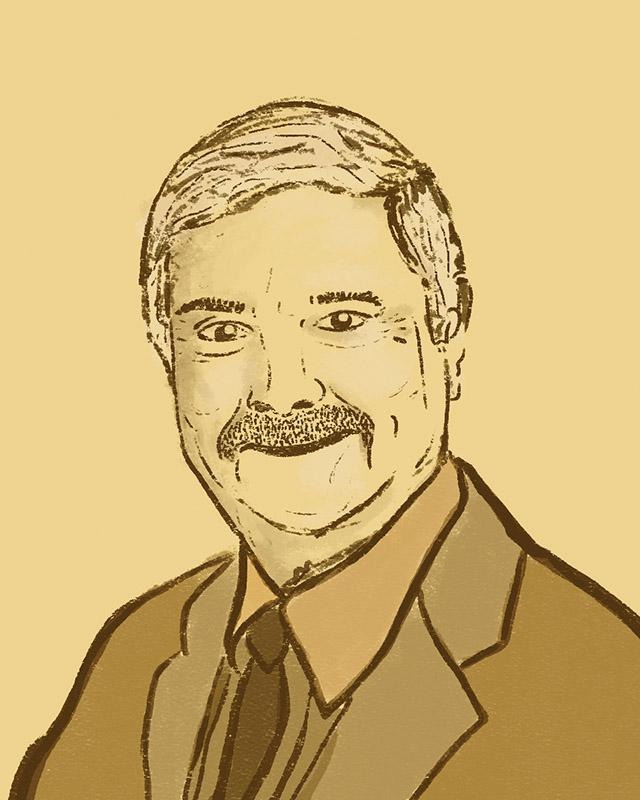
Allen Sellers, Rotary Club of Panamá Nordeste, Panama
Allen Sellers, a member of the Rotary Club of Panamá Nordeste in Panama City for 44 years, says that Panamanians tend to think of happiness in a more goal-oriented framework. “Many times I’ve heard that Panamanians are some of the happiest people in the world,” he says. (The country’s happiness ranking is No. 41 overall.) “I think that this possibly is due to the fact that we enjoy specific, immediate objectives.”
This resonated with me. For years, I believed “to-do” lists were a big waste of time (Don’t write about doing it! Just do it!), but lately, I have found the act of crossing off tasks immensely satisfying. It’s proof of progress, a chance to allow myself to celebrate small victories.
Sellers, a soft-spoken 76-year-old with a military and corporate background, says this is a sign of something larger: a general sense of inner peace. “Happiness,” he says, “comes from many small, seemingly insignificant things that, when added together, become uppercase ‘HAPPINESS.’ And that is a feeling of satisfaction and well-being with the status of things and how we fit into them.” In other words, pay attention to the usual factors, such as health, and economic conditions, but don’t overlook the emotional aspects: relations with your family, friends, and, most importantly, with yourself.
I channeled Sellers by “checking in” on myself at odd times: What am I feeling? Why am I feeling it? Am I being as kind to myself as I am to the people I love? One day, I sat down and listed 50 things I am proud of, an exercise that went from self-indulgent to uplifting to, ultimately, profound. Not a bad way to spend an hour. In the days since, I have routinely pulled out that list and added to it. Every time, it feels good.

Katja Koskimies, Rotary Club of Oulu City, Finland
Which leads me to the world epicenter of happiness for the past eight years: Finland. When I connected with Katja Koskimies, who lives in the coastal city of Oulu near the Arctic Circle, she appeared to be lazing in some kind of a hammock in an idyllic garden. With her flaming red hair and nonstop enthusiasm, she obviously stands out in her home country, which tends to be more guarded about showing emotions. “I like to talk about feelings,” she says. “If you can recognize your own feelings, it’s easy to understand other people’s.”
In Finland, says Koskimies, a 53-year-old business coach, contentment is often quiet and grounded in everyday moments; that might include walking in the forest or calmly enjoying a cup of coffee in silence. Generally, that contentment is connected to one of three things: simplicity, nature, or personal space.
Finns, of course, have some built-in advantages: The country is roomy, roughly the size of Germany but with one-fifteenth of the population, and even the seeming disadvantages, such as the brutally cold winters, don’t seem to bother anyone. A member of the Rotary Club of Oulu City, Koskimies relayed tales of babies routinely learning to sleep outside in temperatures well below freezing. “Weather makes no difference to us,” she says. “Sunny, rainy, snowy, it’s fine.” In the summer, Koskimies motorcycles and soaks in the lakeside sauna; in winter, it’s all snowmobiling, hockey, and ice fishing — as long as she can be close to nature and take it all in, a philosophy that echoed Ambalavanan Muruganathan’s “360 vision.”
I can’t skate and I promised my mother I’d never get on a motorcycle, but the day after talking to Koskimies, I was walking my dog and listening to a podcast when my phone died. My irritation at the sudden silence quickly gave way to boredom. As I looked around for any stimulation to save me, boredom led to curiosity. What does that Tudor mansion look like inside? Soon, I was lost in wonder at my surroundings. My neighborhood was beautiful, the sky huge and extraordinary, and my reliably uncomplicated dog was the perfect companion to experience it with. All this, just two blocks from my door.
So what did I learn from all this? In the end, the small advice ended up making the biggest difference — any lesson I could practice daily to create enough moments of grace and mindfulness that happiness began to seep in without my realizing it. Particularly helpful was a “happiness calendar” Michel Jazzar shared featuring a different prompt for each day, none of them terribly complicated (“Take a step towards an important goal, however small”) but crucial reminders in the daily rush of my life. In the month I followed Jazzar’s calendar, I reconnected with an old friend, let go of a long-held grudge, and finished writing a novel I have been tinkering with for years. After 30 days, I saw a world filled with possibilities.
During that month, one other thing happened. I also dropped off my son for his freshman year at college. He had worked hard to get to that day, showing a steadfast dedication to schoolwork and personal growth that, in all honesty, I didn’t see coming. Predictably, there were a lot of big feelings. After saying goodbye to him in his dorm room, the skies cracked open, rain poured down, and I bawled my head off in the car. It was terrible and wonderful and probably more authentic than any moment I had ever experienced in my 53 years. It was not happiness, nor was it sadness. It was life.
This story features photos by Evan Sheehan, prop styling by Kelly McKai, and illustrations by Madison Wisse. It originally appeared in the December 2025 issue of Rotary magazine.