

How to create lasting impact
Five lessons we learned while building a scalable, sustainable maternal and child health program
1 Oct 2026
Together for Healthy Families in Nigeria, Rotary’s 2022 Programs of Scale grant recipient, set out to increase Nigerians’ access to high-quality healthcare, leading to more births at health facilities and fewer maternal and infant deaths. When Rotary members and partners hear about the program, one question often follows: How did you achieve lasting results?
The answer is not a magic formula. We learned that sustainable impact depends less on individual club and district-led projects and more on Rotary members’ ability to convene the right people and provide strategic direction and oversight, and on how well local systems are empowered to lead. Here are five lessons that stood out.
One of our earliest realizations was that if a government is expected to continue an intervention, it must help design and implement it from the beginning.
We aligned training schedules with state health calendars, harmonized monitoring tools with existing health information systems, and developed protocols that government teams could easily replicate. Once our work became part of their work, ownership increased and duplication decreased.
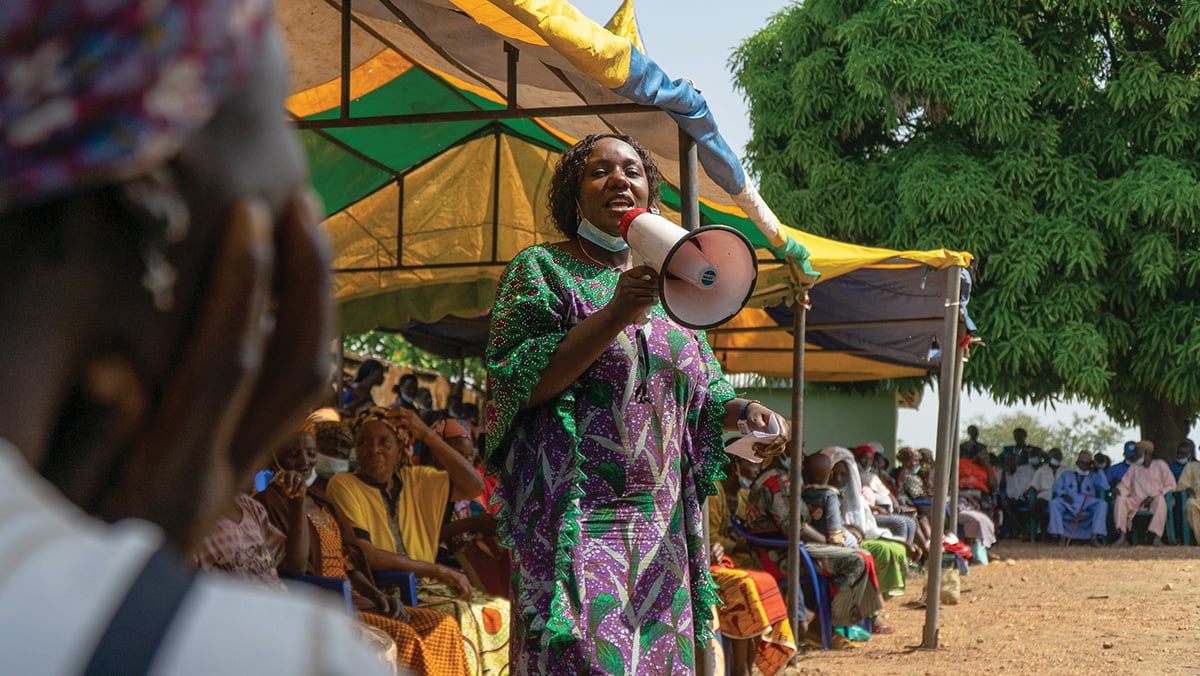
Health workers in Nigeria lead a community dialogue.
Image credit: Maryam Turaki
We quickly learned that handovers rarely succeed when they are treated as a final event.
Instead, sustainability must be co-designed, budgeted, and built into implementation from the start. This required continuous advocacy with state and local authorities, but it ensured that partners understood, owned, and were prepared to continue the work long before Rotary stepped back.
A lesson we learned repeatedly was that every community is different.
In Gombe State, for example, increasing awareness was not translating into more deliveries at healthcare facilities. Rather than conducting more awareness opportunities through community dialogues, we investigated the barriers and discovered that transportation and cost were the real challenges.
That evidence helped persuade government partners to deploy ambulances to secondary facilities and engage transport workers to support referrals to primary health centers. The response came because the data pointed to a clear solution — not because we applied pressure.
Health outcomes depend on more than trained health workers. A skilled midwife cannot save lives if a pregnant woman cannot reach a facility in time.
We learned to recognize ward development committees, traditional leaders, transport unions, and referral networks as essential parts of the health system. Their involvement strengthened trust, improved referrals, and helped communities take ownership of protecting mothers and children.
To protect progress, we worked with government officials to develop standard operating procedures and advocate for their inclusion in government budgets and plans. Institutionalizing successful practices helps ensure that gains continue regardless of who occupies a particular office.
At the same time, some of our strongest champions were not always senior officials. Local government desk officers, ward development committee members, and Rotary and Rotaract volunteers often solved problems long before they became challenges. Sustainable change depends on champions throughout the system.
Perhaps the most important takeaway is that partnership with government is not simply a stakeholder-engagement activity — it is the engine of sustainability.
Stronger systems lead to better services, better services build community trust, and greater trust increases service utilization. That utilization generates the data needed to strengthen the system even further.
Our responsibility was to help start that cycle and then make ourselves progressively less necessary to it. Then, lasting change becomes possible — and that’s ultimately the goal of sustainable maternal and child health programs.
This story was written by Toyosi Adebambo and edited by Daniela Kaempfe of the Rotary Action Group for Reproductive, Maternal, and Child Health. Read more at rotaryserviceblog.org.
This story originally appeared in the October 2026 issue of Rotary magazine.