Food as medicine for TB recovery
Rediscovering a weapon against the deadliest infectious disease, TB advocates look to better nutrition
by Ruby Prosser Scully
20 Aug 2026At a clinic in the city of Coimbatore in southern India on a recent afternoon, a 29-year-old man with tuberculosis comes in for his medication and receives something extra: a small white tub of powder. It’s a nutritional protein supplement, one that’s vitally important, as malnutrition is closely linked to the lung disease. The man is severely underweight at just 38 kilograms (84 pounds) with a dangerously low body mass index. A clinic worker snaps his photo, jots down his information to help with real-time treatment monitoring, and sends him on his way with instructions to return in two weeks.
The man is among hundreds of patients receiving the nutritional supplement with their TB medications thanks to a project led by the Rotary Club of Coimbatore New Town and supported by a Rotary Foundation global grant. Local health officials first approached the club in 2024 asking for help with their severely undernourished TB patients, amid a renewed appreciation globally of the link between the disease and nutrition. “At that time, many patients were suffering from severe weight loss, weakness, low immunity, and difficulty continuing TB medication due to a lack of proper nutrition,” says Pakshirajan Durai Murugan, the club’s charter president and project lead.
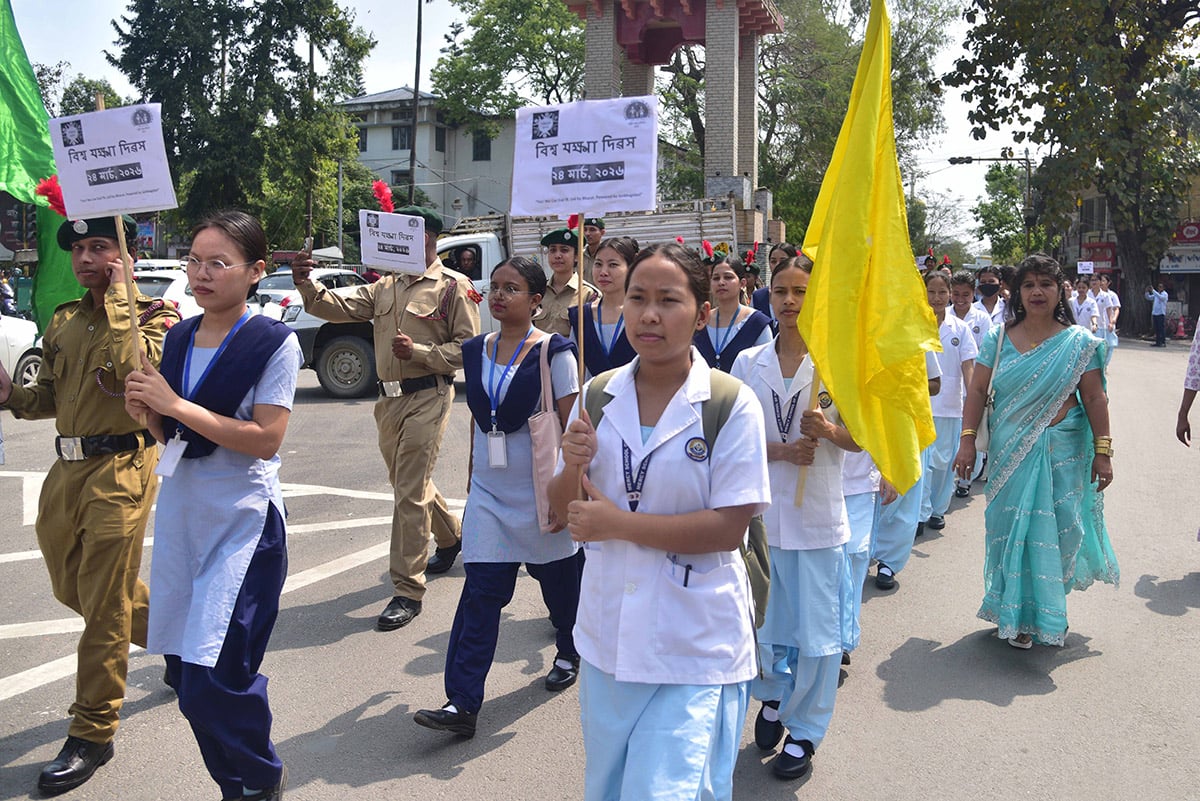
Health workers and youth cadets participate in a rally on World TB Day in Assam, India, in March.
Anuwar Hazarika via Getty Images
Even before it sought grant funding, the club was able to raise about $4,000 to launch an immediate pilot intervention. They recruited around 200 highly vulnerable TB patients with low BMIs and provided them with the supplement for three to four months. The twice-daily supplement, which makes a slightly sweet drink when mixed with water or milk, gives patients an additional 25-30 grams of protein per day. Many patients gained about 1 to 2 kilograms (2 to 4 pounds) in the program. “Even a small weight gain is encouraging in TB recovery, because many patients normally continue losing weight during illness,” says Durai Murugan.
Tuberculosis is the world’s deadliest infectious disease. In 2024, nearly 11 million people were infected and more than 1.2 million died. The Mycobacterium tuberculosis bacteria mostly infects the lungs and spreads through coughing, sneezing, talking, or even laughing. Once cast into the air, the bacteria can linger there for hours. This puts other members of a household at very high risk of infection. As a result, around 1 in 4 people in the world have been infected, though only 5 to 10 percent of them develop active, symptomatic disease. For the rest, their immune systems are able to keep it under control. That is, until something weakens those defenses, such as an HIV infection, diabetes, age — or malnutrition.
Undernutrition is a leading risk factor for TB, and it’s responsible for about 1 million new cases per year, according to some estimates. Half the people with TB in India have a BMI below the 18.5 threshold considered healthy for an adult, and about a quarter are below 16, notes Pranay Sinha, an assistant professor at Boston University’s School of Medicine and an infectious disease physician at Boston Medical Center. He calls the figure “appalling.”
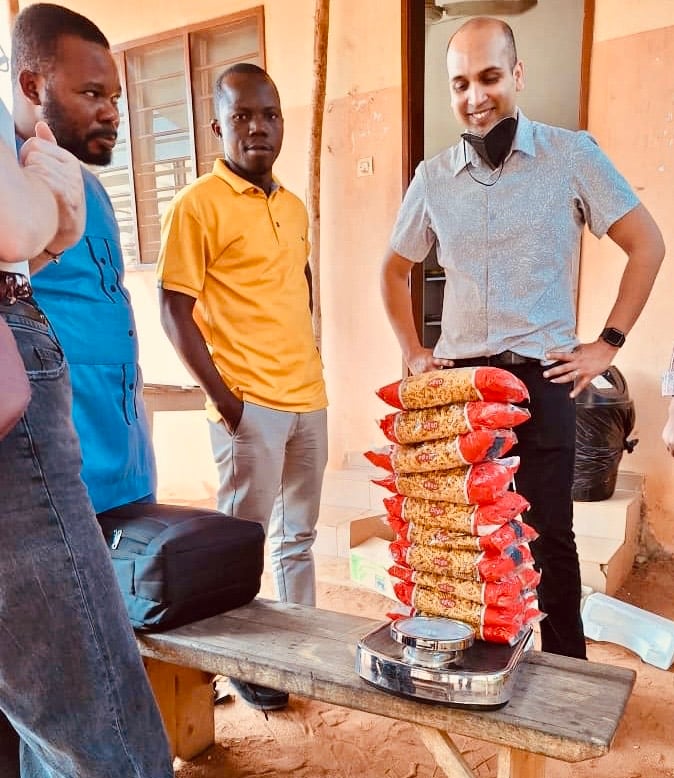
Pranay Sinha, a Boston University expert on the role nutrition plays in TB outcomes, at work in the field.
Courtesy of Pranay Sinha
For most people exposed to the bacteria, their immune system catches the germs in the lungs and traps them in a cluster of cells called a granuloma. But a lack of food robs the body of the energy and nutrients needed to maintain this defense, letting the bacteria break the blockade and spread through the body.
The problem compounds itself. During an infection, the immune system releases proteins called cytokines to fight the invader, but these chemical messengers can also break down muscle tissue and suppress the body’s response to hunger signals. The result is a massive energy gap where the body needs more food than normal while the individual eats even less. “In India, we come across people with TB who have BMIs of 10, 11, and 12, which I did not know was compatible with life,” says Sinha, an expert on the role nutrition plays in TB outcomes. “It’s unbelievable.”
This focus on nutrition isn’t a new approach. Wealthy countries saw spectacular cuts to TB rates before effective medicines were introduced in the 1950s thanks to public health measures that included better nutrition. But the adoption of lifesaving medications pushed nutrition to the margins, explains Sinha. “We’ve built TB elimination around diagnostics and prescriptions — precise, scalable, the same X-ray, pill, or vaccine in New York as in New Delhi,” he says.
“Food is messier, more personal, harder to standardize. And we’ve treated that messiness as a weakness. But empirically? Food is a more effective TB intervention than any available vaccine. We’ve been underutilizing it.”
The only vaccine currently available is more than 100 years old, and for four decades no new medications reached patients. That’s starting to change with promising vaccines in clinical trials and three new compounds approved in the last 14 years.
Meanwhile, food and nutrition are in the spotlight again. Last year, the World Health Organization released guidelines for the first time calling for nutritional support to all undernourished TB patients, as well as food assistance to prevent TB in household contacts in places of food insecurity. That recommendation was driven by a landmark 2023 study that was the first randomized trial to show that giving food and supplements to household contacts cut their risk of contracting TB by almost half in the following two years.
India has also invested in nutrition. Since 2018, all TB patients receive a cash transfer each month to pay for food. The positive response from both patients and government TB officials to the Coimbatore Rotary club’s 2024 pilot encouraged members to scale up the program. They secured a $35,000 global grant, which is currently providing supplements to 950 patients for the duration of their treatment, and that number is expected to expand to a total of around 1,500 patients until mid-2027.
Since widening the rollout of these supplements to TB patients of any weight, the district has seen mortality rates drop from 7 percent to 4 percent. This is due in part to recent improvements in diagnosis, treatment, and monitoring. But it’s also because patients are far more likely to return for their medication now that they’re receiving the nutritional powder, says Dr. Murugaiyan Sakthivel, deputy director of TB medical services in Coimbatore district.
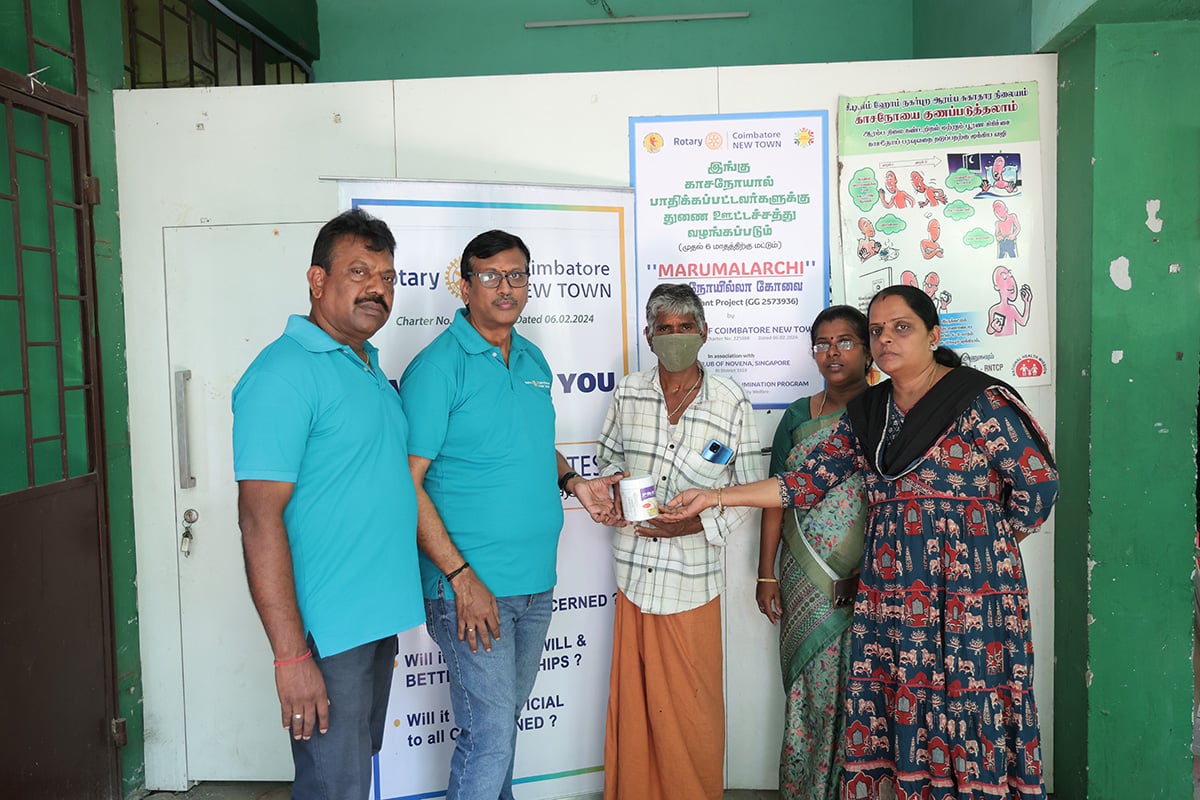
Members of the Rotary Club of Coimbatore New Town display the nutritional supplement.
Courtesy of Pakshirajan Durai Murugan
One reason that’s true is that improved nutrition can make it easier to tolerate medications. Dr. Zolelwa Sifumba knows this firsthand. She contracted multidrug-resistant TB at age 22 as a medical student in Cape Town, South Africa. Instead of taking the usual two to five tablets per day, Sifumba had to take 21. “When you haven’t had anything to eat, the side effects just feel a lot more pronounced,” she says. “So I’m immediately nauseous, meaning it’s even harder to keep pills down.”
Sifumba moved home, where her mother cooked proper, nutritious meals. That made a big difference to Sifumba’s recovery, and the experience left her passionate about TB prevention, tackling stigma, and supporting patients. Today, Sifumba is a clinician, researcher, and activist for better TB care.
The Rotary Foundation has awarded more than $2.7 million in dozens of global grants for TB prevention and care around the world since 2013. Such support is especially important as governments cut aid programs. While acknowledging the challenges, Boston University’s Dr. Sinha is optimistic overall, pointing to India’s success. “I see progress,” he says. “That’s the joy of being in this field at this time. I really do see minds changing.”
This story originally appeared in the August 2026 issue of Rotary magazine.