Grandparents for Vaccines share powerful stories
An effort to keep today’s children from suffering the diseases of the past
by Dr. Arthur Lavin
7 Oct 2026In 1979, during the first weeks of my residency at Boston Children’s Hospital, I cared for a very sick 8-year-old boy. He was infected with meningococcus, a bacterium that overwhelmed his body and caused a deadly case of sepsis. His parents and I sat at his bedside, watching as his heart alternated between a slow, imperceptible beating and, with the administration of an hourly medication, a more normal rhythm.
But the infection was advanced, and after several hours, the boy died. I will never forget his agony nor the agony of his loving family. And to this day I remain so grateful that a vaccine — the meningococcal vaccine — means parents and their children no longer need to endure such anguish and pain.
But something peculiar happened in the years after the vaccine was introduced. As relieved parents had their children vaccinated and those agonizing deathbed scenes became less frequent, people forgot about the danger of meningococcus. Now pediatricians are reporting that these dreaded infections are reappearing in our children.
And it’s not just meningococcus. In 2000, the Centers for Disease Control and Prevention declared that measles had been eliminated in the United States — and yet today, the disease is surging across many regions of the country. According to the CDC, the U.S. is now experiencing its highest levels of measles infections in 35 years. That’s unacceptable.
Illustrations by Mar Hernández
It is a bitter irony that the very success of childhood vaccination has made us forget critical stories about the sad and long-term impact that measles and other infectious diseases can have. We now realize that vaccines can not only erase the disease itself but any memory of that disease as well. And regrettably, that can contribute to a diminished interest in preventing it.
With their unique position in society, grandparents can help dispel that cultural amnesia. Traditionally, we have shared wisdom across the generations using true stories from our past, and those stories can help shape the choices that others make. The power of grandparents’ stories flows from the depth of our real experience and the love we have for our grandchildren.
This is why, one year ago, I helped found Grandparents for Vaccines. As a husband, father, grandfather, and retired pediatrician, I have witnessed some heartbreaking moments that continue to keep me up at night. Today I can’t help but wonder why parents would invite preventable diseases — diseases we had all but eradicated — back into our children’s lives.
At Grandparents for Vaccines, we collect emotionally powerful stories that can help younger people remember, if only vicariously, the ravaging effects of diseases that medical advances can now prevent. Therese Vogel’s story is a great example.
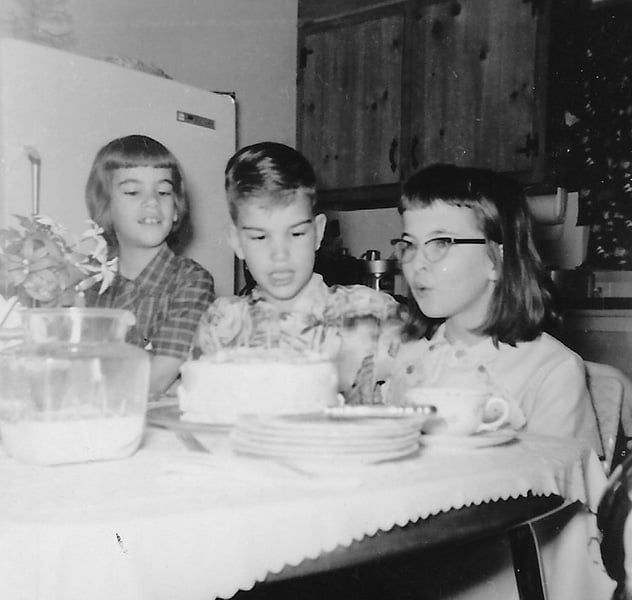
Therese (left) and her brother, Lenox, watch their sister, Nancy, blow out the candles on her birthday cake.
Courtesy of Grandparents for Vaccines
An Oregon-based mother, grandmother, and member of Grandparents for Vaccines, Therese recently shared the story of her sister, Nancy, who, at age 4, suffered an infection in her brain called encephalitis, which can be a terrible complication of measles. Sadly, the condition caused intellectual disabilities that affected Nancy for the rest of her life. In a moving video — one of many shared on our organization’s YouTube channel — Therese expressed her wish that no child should suffer the way her sister did. Nancy’s experience with measles teaches us all that the infection can have devastating consequences. Through her story, Therese reminds us what’s really at stake and why we need to show people the continued importance of childhood vaccinations.
The power of vaccines to wipe out disease was proved decisively by the total eradication of smallpox. The second human disease to be wiped out will likely be polio, in large part due to the extraordinary work of Rotary International and its dedicated and selfless members. Their outstanding work reminds me of the collective power we all possess to protect our grandchildren from needless harm.
And yet the same door that’s opening to measles might, unbelievably, open to admit polio. Right now, millions of children in the United States are not vaccinated against polio, and they could contract the disease should it ever return here.
As I contemplate how that would impact U.S. families, I think of Janice Flood Nichols, another of our members and a grandmother from Washington state. When Jan was 5, polio struck her twin brother, Frankie. She saw her twin go to the hospital and will never forget the grief she and her parents felt when he died.
Not long after, Jan came down with polio too. Jan’s parents took her to the same hospital where Frankie had just died. She lost the ability to walk, then regained it. Now, in later years, she’s weakening again. Why would we ever invite polio, as well as measles and other diseases, back into our children’s lives?
Grandparents, we’d love to hear your stories as well. Share them with us at magazine@rotary.org, and put the word “grandparents” in the subject line.
Not long after, Jan came down with polio too. Jan’s parents took her to the same hospital where Frankie had just died. She lost the ability to walk, then regained it. Now, in later years, she’s weakening again. Why would we ever invite polio, as well as measles and other diseases, back into our children’s lives?
As a founder and board president of Grandparents for Vaccines, my goal is to change our national conversation on vaccinations from confusion and fear to confidence and protection. (As a retired pediatrician, I am also encouraging parents to vaccinate their children according to the schedule provided by the American Academy of Pediatrics.) I’m not alone in striving toward this goal. In the year since our founding, nearly 6,000 members across more than 30 U.S. states have joined Grandparents for Vaccines. We are mobilizing locally, through speaking engagements, letters to the editor, and local media interviews.
We are also acting nationally and have shared our story with audiences through broadcast media, print stories, and social media. We marked our first anniversary in September with a national Two Weeks of Action campaign, donating books about immunization and science to libraries and engaging in a back-to-school education initiative.
Grandparents for Vaccines invites everyone to share their stories, volunteer locally, and help sustain this important work. Just as Rotary and its members rallied the world to fight polio, our organization is rallying the nation’s grandparents to eradicate the diseases that are stalking our children today: measles, meningitis, congenital rubella, and more. We look forward to working together not only with grandparents but with everyone who cares about our children, their health, and their futures.
A retired pediatrician, Arthur Lavin is the board president and co-founder of Grandparents for Vaccines.
This story originally appeared in the October 2026 issue of Rotary magazine.
Beth Summer, who lives in Florida, has two children and three grandchildren. “They are all my heart and soul,” she says, “and thankfully everyone is fully vaccinated.” Summer shared the story of her brother with Grandparents for Vaccines:
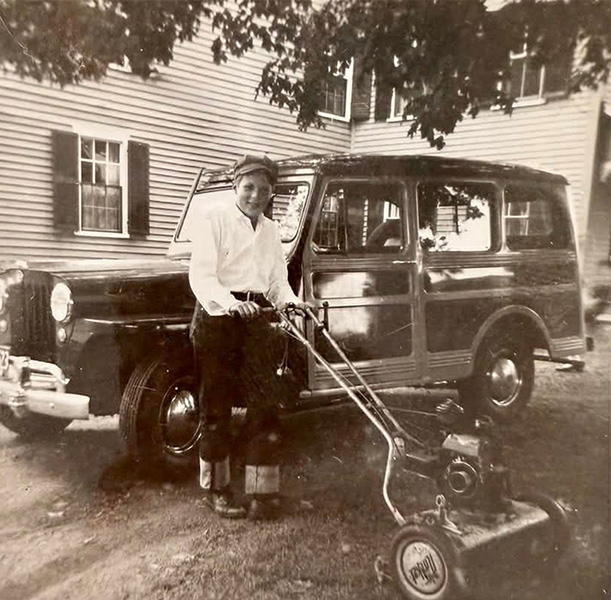
In 1954, my older brother, Whizzer, contracted polio. He was 16 years old, a football standout, enjoying life as a young man on the cusp of an anticipated and exciting future.
Struck with paralysis and sickness, Whizzer spent the next year in and out of hospitals and endured almost 30 surgeries. With perseverance, and with anger at the universe, he was able to walk again, albeit with a pronounced limp, a heavy clunker kind of brace, and crutches. His leg was withered from all the surgeries, and he had the longest zipper scar from the top of his leg to the bottom.
My parents and Whizzer argued and yelled often. It was a tumultuous time, and turmoil was everywhere. The pain, the screaming — imagine that indignation. He lost his senior year due to his recovery and missed graduating with his classmates.
After a later graduation and a short-lived stint in college, he set out on his own with his clunker brace, crutches, and a chip on his shoulder. While he was very successful and highly regarded in his career, his anger and resentment often spilled over into his family life, and he struggled internally.
As he aged, my brother started experiencing post-polio syndrome. Eventually he needed to use a wheelchair. He died in 2020 at age 81, and he’d never imagined that he would live so long with polio. He had two wonderful children, four wonderful grandchildren, and a wonderful wife. His kids, his grandkids, his wife — they’re his legacy, but so was his polio. It determined his journey.
I tell my brother’s story to highlight what life was like prior to the polio vaccine, just one of so many vaccines that have been created since the 1950s. Polio has been eradicated in just about all the countries in the world. Our children are our future, and we cannot abandon our obligations to them. Our children need to be protected from devastating diseases that largely affect them. Please join me and my colleagues at Grandparents for Vaccines, and let’s make sure that we take care of our kids’ future and their well-being.
Photo: Beth Summer’s brother, Whizzer, mows the lawn prior to contracting polio. Courtesy of Grandparents for Vaccines