High-tech classroom upgrades open pathways for girls in India
High-tech upgrades help girls in India turn aspirations into reality
by Charlene Drummer and Jeff Krolik
31 Jul 2026Eighteen-year-old Hareesha has big dreams. She wants to go into medicine, eliminate the poverty that many people in her part of southern India endure, and lift up her community. That she’s able to kindle such lofty hopes is thanks, first, to a promise: Her father pledged to provide her and her two siblings an education.
That’s no small feat. Her parents struggled to feed Hareesha and her brother and sister. The level of desperation in their village is so extreme that some parents even sell their daughters into early marriages at age 14 or 15. When a wealthy family offered to buy Hareesha, her father refused. “He vowed to work hard and make sure we ate, even if he didn’t,” she says. “He promised to give us the education we deserved.”
Girls living in the remote forest villages of Andhra Pradesh state have historically been deprived of access to a quality education. Because of that, they have almost no opportunity for economic advancement or options outside the home. These girls face numerous challenges, including low literacy rates, limited health care access, discrimination, and social exclusion. Being inadequately educated condemns these girls to a life of limitations.
Hareesha’s father did not want that life for her. He encouraged her to get an education at one of the state’s tribal schools (“tribal” is the designation adopted by the Indian government to recognize the Adivasi ethnic groups, who are considered to be the original inhabitants of the broader Indian subcontinent and comprise about 9 percent of India’s population). In conjunction with the federal government, the state’s Tribal Welfare Department has built such schools to alleviate poverty and prevent child marriages.
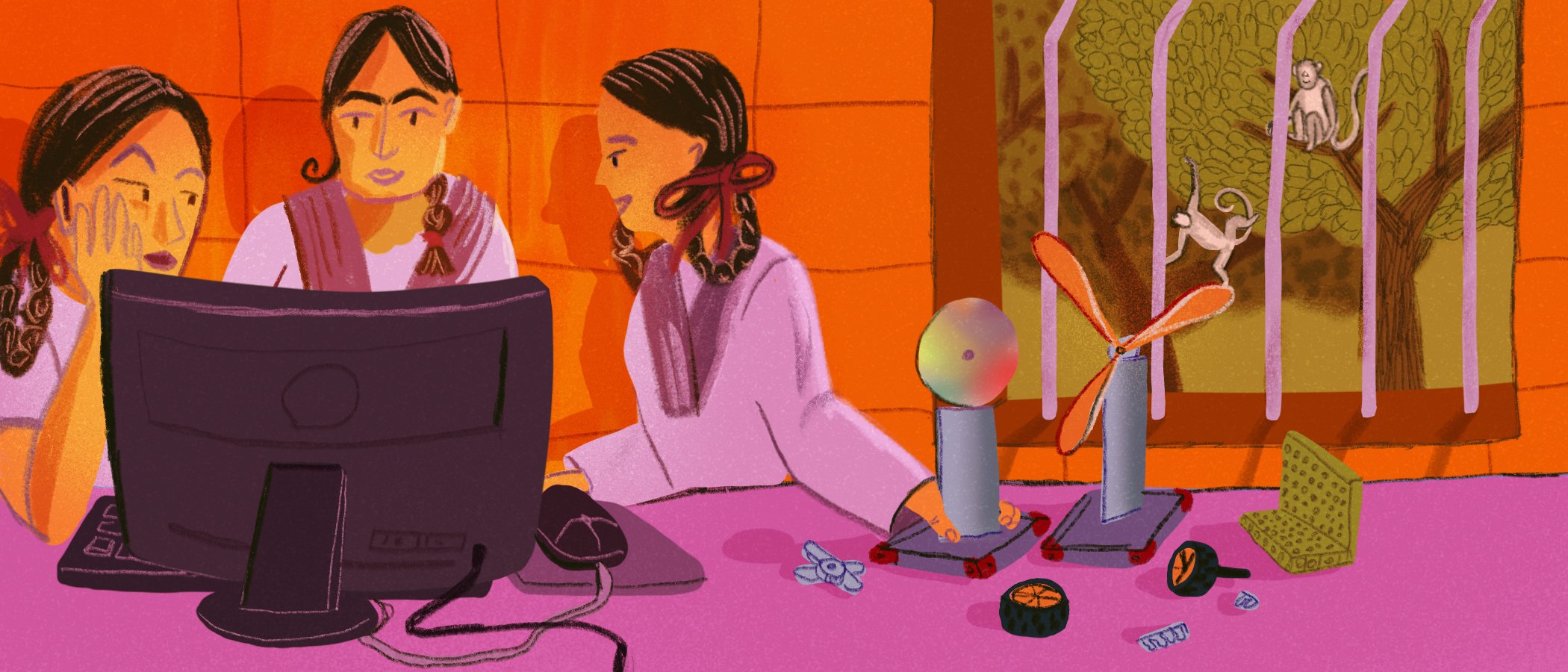
Image credit: Anjali Kamat
Hareesha’s parents enrolled her at the Tribal Welfare Girls’ Residential School and College of Excellence in Vissannapeta. About 640 girls, in grades five through 12, attend the school, where they receive a basic education, as well as food, clothing, and housing. However, the girls still face limited opportunities for advancement because the government lacks sufficient resources to provide a fundamental component that is crucial to being competitive in the modern world: access to digital tools and resources.
Bobba Venkatadri found that disparity troubling. Born in Andhra Pradesh in 1943, Venkatadri had attended Zilla Parishad High School in Unguturu, India. He went on to graduate from college — the first in his family to accomplish that educational feat — and move to the United States, where he had a successful career in the pharmaceutical industry and as a venture capitalist.
But Venkatadri never forgot where his journey had begun, and 10 years ago, on one of his regular return visits to Andhra Pradesh, he focused his attention on his former high school. “When I went back and looked at the village, all the well-to-do kids had left my school and were now going to private schools where they have the computer labs, the STEM labs, and digital classrooms,” says Venkatadri. “Those kids are getting ahead, getting into the better colleges, getting the better jobs. Whereas these poor kids are being left behind. These girls, because of the lack of education and personal growth opportunities, are forced to marry when they are 15 and 16.”
Venkatadri decided to make it his mission to help transform the lives of children with disadvantages in his native country by equipping them with 21st-century digital learning tools. What’s more, in July 2020, he joined the Rotary Club of Burlingame & Hillsborough, California, where we are also members. He’d soon realize how vital Rotary’s vast global network and sterling reputation could be in helping him achieve his goals.
Venkatadri began by enlisting the club’s international service committee to educate other club members about the challenges faced by girls from tribal communities in India. He explained how a digital education could help them. With that in mind, he developed a sustainable fivefold plan to provide schools with modern computer and STEM labs; train teachers to maximize those digital tools; monitor students’ academic progress; promote parent and community involvement; and install solar panels and provide battery storage to ensure uninterrupted internet service in those remote villages.
The club began to implement its plan at Venkatadri’s alma mater, the Zilla Parishad High School in Unguturu. With the Rotary Club of Vijayawada taking the lead in India, the team raised $63,000, including a $28,000 global grant from The Rotary Foundation. The members also allied with the Kakinada Engineering Alumni Trust for Service; founded in 2014 and known as KEATS, the organization, as its website explains, aspires to lift up vulnerable members of society “through knowledge, skill-building, and sustainable development programs in the areas of education, empowerment, and environment.”
Together, the partners installed computer and STEM labs, provided the essential educational software, and trained and supported teachers at the Unguturu school as they adapted to the new digital learning environment. Collaborating with KEATS, the Vijayawada club also closely monitored students’ progress. Since the project was launched in December 2022, the percentage of the school’s students who graduate has climbed from 46 percent to 94 percent, and average test scores in key subjects have risen from 68 percent to 80 percent. The school administration reports that “the use of technology has enhanced teaching efficiency and facilitated better student engagement,” while the local government in Andhra Pradesh has embraced the initiative and is committed to ensuring its sustainability in the years ahead.
Word of the project’s success got around. The Rotary Club of Vijayawada Midtown reached out to Venkatadri and asked to partner with him and his team to help bring a tribal school for girls into the digital age. With KEATS and the Rotary Club of Burlingame & Hillsborough again on board, this new partnership added two additional allies: the Andhra Pradesh Tribal Welfare Residential Educational Institutions Society, or APTWREIS, which manages schools, and the Andhra Pradesh Non-Resident Telugu Society (APNRTS), which coordinates the strategic use of resources of Indians living abroad.
And the school this newly assembled team identified to help was the Tribal Welfare Girls’ Residential School and College of Excellence in Vissannapeta — the same school that Hareesha attends.
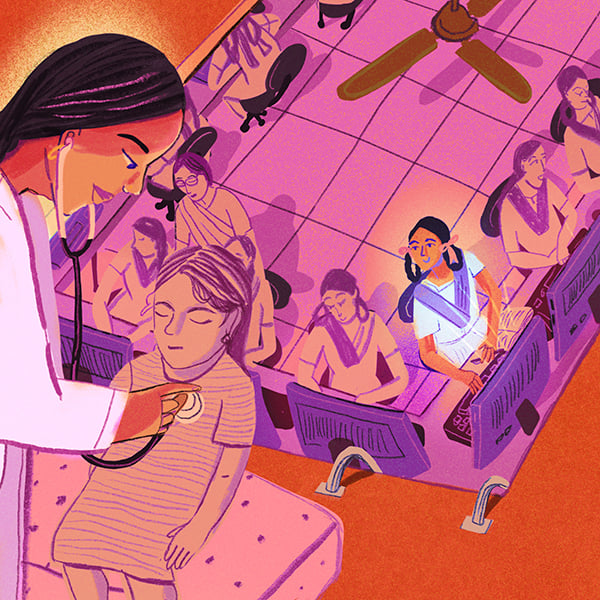
Image credit: Anjali Kamat
Once again a flurry of fundraising followed, raising more than $90,000 from clubs and districts in California and India and netting a $40,000 global grant. That money was used to provide teacher training and equip the Vissannapeta school with two computer labs and two STEM labs.
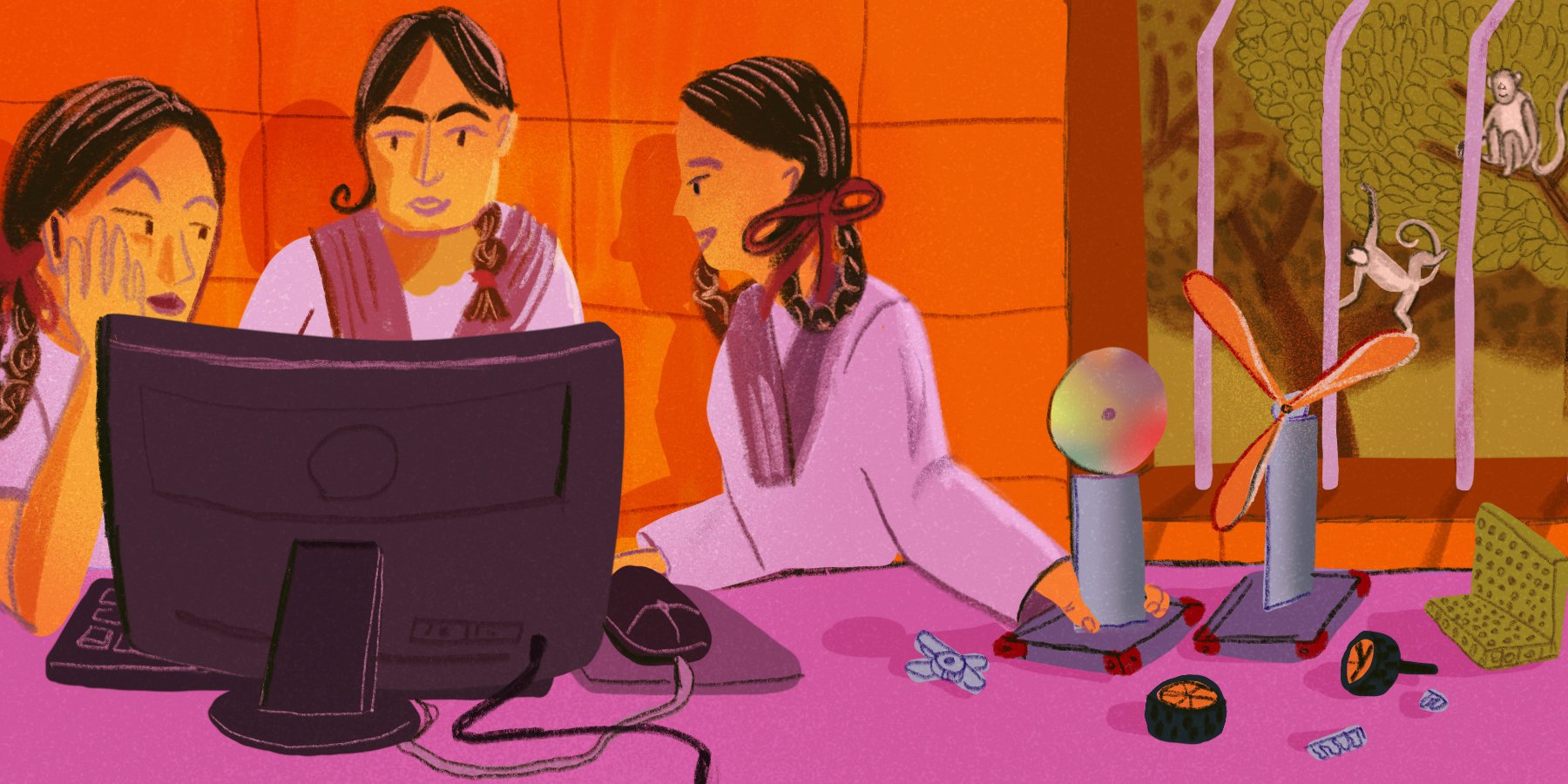
As the Vissannapeta project progressed, the team recognized additional needs at the school. Internet connections and power sources were inadequate, available water was unsanitary, and monkeys routinely invaded the campus and interfered with the girls’ learning. The team secured an additional $132,700 from corporations, nonprofits, and individuals to provide infrastructure improvements, including solar power, clean water, and barriers to keep out the pesky monkeys. One significant donor, Dr. Reddy’s Laboratories, a multinational, India-based pharmaceutical company, affirmed that it was Rotary’s participation in the project that led it to donate $100,000 for infrastructure improvements.
The school inaugurated the new computer and STEM labs in December 2024. With Venkatadri and other members of the Rotary club looking on, Hareesha and her classmates celebrated the new improvements in a festive, dance-filled parade. She and her classmates were thrilled about the new labs and the opportunities now available to them. Their excitement was not merely something of the moment: Test scores at the school have already shown significant improvement.
Not resting on their laurels, that same team — the Vijayawada Midtown and Burlingame & Hillsborough clubs and their alphabet-soup allies: KEATS, APNRTS, and APTWREIS — turned its attention to a third school in Andhra Pradesh, the Tribal Welfare Girls’ Residential School and Junior College in Busarajupalle. The team raised $117,000, including $52,000 from a third global grant, and this fall the school introduced two new computer labs and two STEM labs. In 2026, Venkatadri and the Rotary Club of Burlingame & Hillsborough plan to get the team together yet again to replicate the three earlier initiatives at two additional schools in Andhra Pradesh.
“Education is the greatest equalizer between the rich and the poor,” insists Venkatadri. His mission to transform the lives of 10,000 children in the same part of India that launched his life’s journey is well underway. But as Venkatadri acknowledges, it is Rotary’s strength and reputation, as well as its support for basic education and literacy — one of Rotary’s areas of focus — that have made these projects not only possible but successful.
Evaluating these projects strictly from the perspective of fundraising, they have raised nearly $725,000; donors included not only The Rotary Foundation but 24 Rotary clubs and three Rotary districts in the United States and India, as well as a conglomeration of corporations, nonprofits, and individual donors, all of whom, familiar with Rotary’s reputation, knew that their investment would be wise and well spent.
The success of these projects, however, is not to be measured by the bottom line. Investing in these girls not only gives them a chance to find jobs and escape the cycle of poverty but also empowers them to serve others, become leaders, and effectuate widespread change.
Look no further than Hareesha for evidence of that. She shared her story with several of us from the California club when we attended the inauguration of the computer and STEM labs at her school. “My parents have high hopes for me,” she told us. “I want to become a cardiologist because my niece passed away due to heart disease. If we had a doctor in the family, that child would have had a happy life. That is why I’m focused on pursuing a career of becoming a doctor.”
Buoyed by the opportunities now available to her, Hareesha is looking beyond what she can do for her family and her village. “After I become a doctor, I want to eliminate poverty and see the country develop,” she said. “I want to change the world around me. I know that will take time, but I will definitely do it. This is my dream.”
And so Venkatadri’s dream nurtured Hareesha’s dream — a dream sustained, and given the possibility to become real, by Rotary.
Charlene Drummer and Jeff Krolik are members of the Rotary Club of Burlingame & Hillsborough in California.
This story originally appeared in the November 2025 issue of Rotary magazine.